



Die-Cast vs Plastic Stand Mixer Housing: Which One Is Better for Commercial Use?
September 21, 2026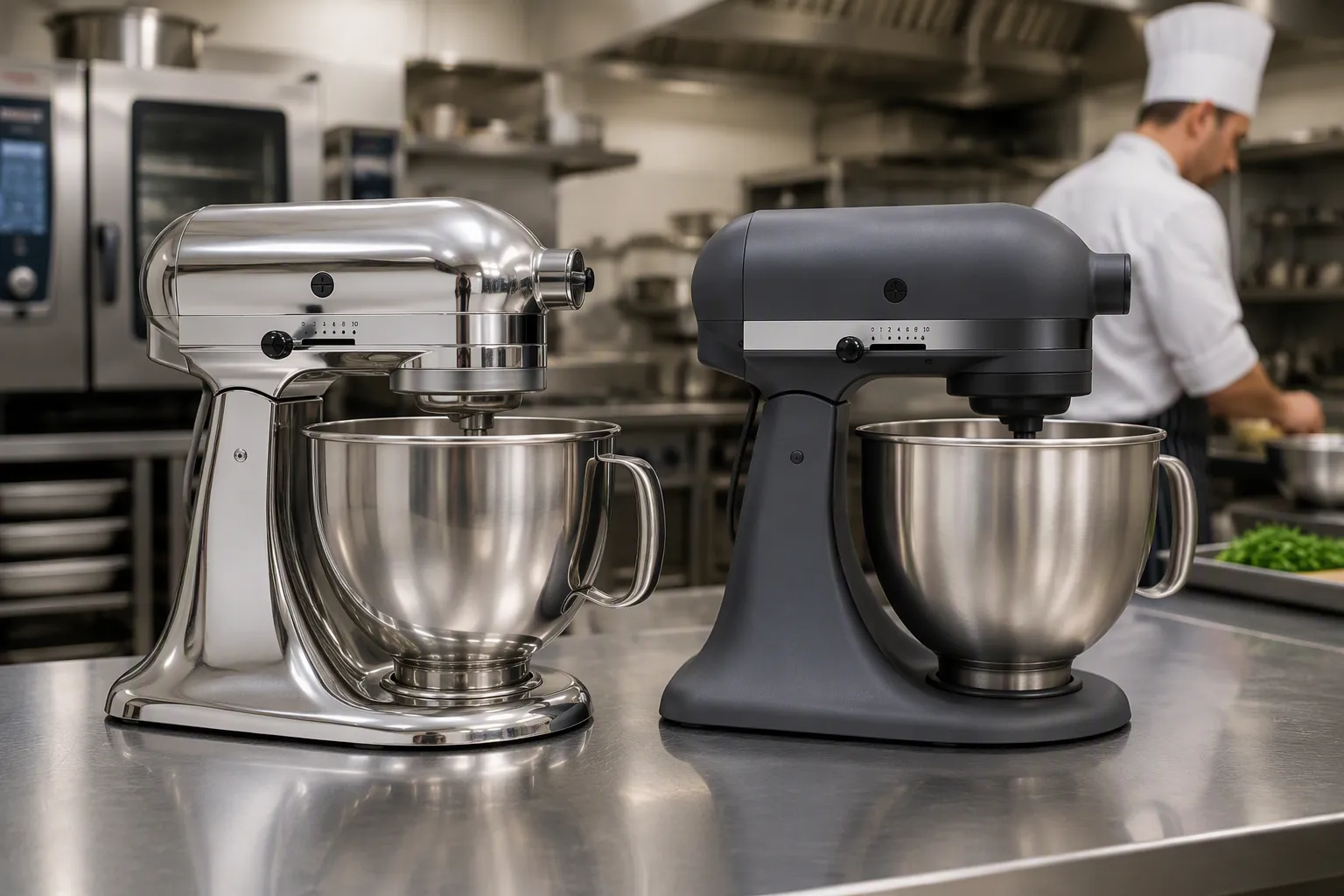
Die-cast housing is the definitive choice for commercial stand mixer use. It offers superior durability and sustained performance under heavy workloads, outperforming plastic. Plastic suits home kitchens with its light weight and lower cost, but commercial kitchens require robustness. Which One Is Better for Commercial Use? Die-cast ensures better long-term value and reliability for professional kitchens.
A commercial kitchen runs mixers for hours every day. Housing material determines how long a machine survives that pace. Die-cast aluminum and plastic behave very differently under this pressure.
Die-cast metal sets the industry benchmark for longevity. KitchenAid built its reputation on traditional die-cast construction, and owners report units running for 50 years or more without repair. That track record explains why the die cast stand mixer housing remains the standard for heavy-duty work.
Sanlida manufactures a dedicated die-casting stand mixer line alongside heavy-duty commercial stand mixers. These models use metal housings that resist deformation, absorb impact, and hold precise tolerances across thousands of mixing cycles. A commercial stand mixer housing material of this grade protects the internal gear train from flex and misalignment. Metal simply does not fatigue the way polymer does.
Plastic housings save weight and cost, and they perform adequately in home settings. Commercial use exposes their limits. Heat, vibration, and constant load cause plastic to creep, crack, and discolor over time.
KitchenAid faced criticism for some models that used plastic transmission housings. Those components cracked under normal use, which damaged the brand's durability reputation. The lesson applies broadly: polymer parts degrade faster when motors run hot and workloads stay high.
|
Factor |
Die-Cast Housing |
Plastic Housing |
|---|---|---|
|
Impact resistance |
High |
Moderate to low |
|
Heat tolerance |
High |
Limited |
|
Deformation over time |
Minimal |
Progressive |
|
Typical service life |
Decades |
Years |
The best material for commercial mixers must survive daily punishment. Die-cast metal wins on every durability measure that matters in a professional kitchen. Plastic suits light duty, not continuous operation.
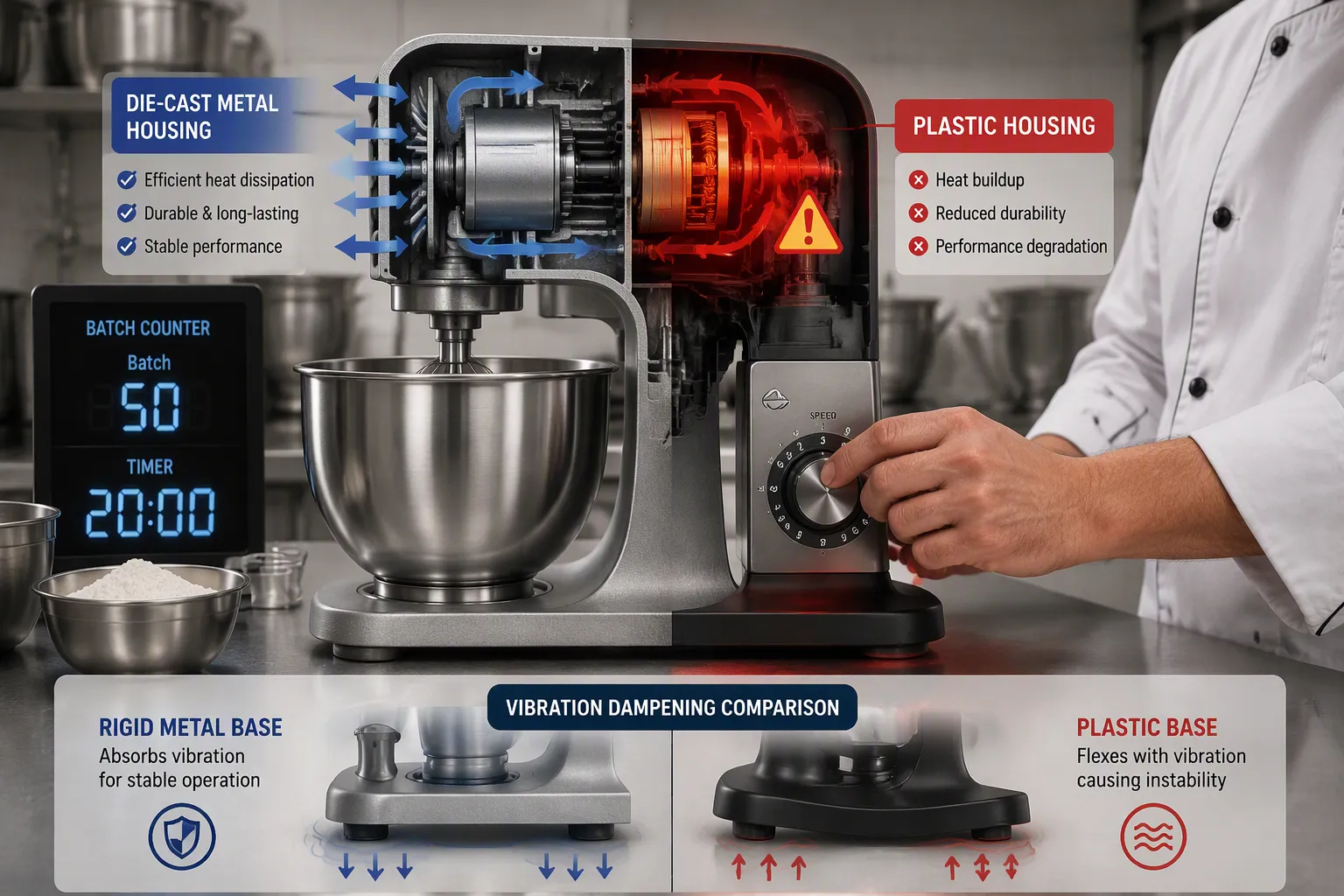
A commercial mixer runs for hours without rest. Performance depends on how the motor, transmission, gears, airflow, and housing work as one system. Each part shapes noise level, speed accuracy, and heat buildup.
Heat is the main enemy of any motor. A die cast stand mixer housing pulls heat away from the motor and spreads it across a wide metal surface. Air channels inside the housing then carry that heat out. Plastic insulates instead of conducting, so heat stays trapped near the windings. Over a long shift, trapped heat shortens motor life and can trigger thermal shutdown.
Motor type also matters. DC motors run quieter and hold speed more precisely under changing load. AC motors cost less and use a simpler design, but they lose speed accuracy when dough stiffens. A professional kitchen that mixes dense dough all day benefits from the DC advantage.
Sanlida employs 132 R&D engineers and launches 30 new models each year. That team studies airflow paths, winding insulation, and thermal limits to keep motors protected during continuous duty.
|
Feature |
DC Motor |
AC Motor |
|---|---|---|
|
Noise level |
Lower |
Higher |
|
Speed control |
Precise |
Basic |
|
Upfront cost |
Higher |
Lower |
|
Best fit |
Heavy commercial load |
Light, budget duty |
Vibration wears gears and loosens fasteners. A rigid metal housing absorbs vibration and keeps the gear train aligned. Plastic flexes under load, so gears shift out of mesh, wear faster, and produce more noise. Proper gear engagement depends on a housing that holds its shape.
Weight helps here. A heavy die-cast base stays planted on the counter, even when the mixer kneads stiff dough at high speed. That stability protects the transmission and keeps results consistent from the first batch to the last.
The commercial stand mixer housing material therefore drives far more than appearance. It controls heat flow, noise, gear life, and speed consistency. Buyers who weigh these factors together will see why die-cast metal remains the best material for commercial mixers.
A die-cast stand mixer housing costs more at purchase. The metal casting process, machining, and finishing add expense compared to molded plastic. Commercial buyers often hesitate at the higher price tag. That hesitation makes sense for a home baker who mixes once a week.
The math changes in a professional kitchen. Plastic housings crack, warp, and fail under continuous load. Each replacement adds cost, downtime, and labor. A die-cast unit often outlasts several plastic machines. The total cost of ownership therefore favors metal for high-volume operations. A buyer who replaces a plastic mixer every few years spends more than one who invests once in die-cast.
Sanlida keeps die-cast pricing competitive through scale. The company runs 26 production lines and produces 500,000 units monthly. That capacity spreads tooling and material costs across a large output. Buyers get durable die-cast construction without paying a premium for low-volume manufacturing. That scale also shortens lead times for bulk orders.
The commercial stand mixer housing material also affects repair bills. A rigid die-cast frame protects gears and bearings from misalignment. Plastic flexes, so internal parts wear faster and require more frequent service. Fewer repairs mean lower lifetime costs. Service intervals stretch when the housing holds its shape.
Sanlida's one-stop service covers product selection through after-sales support. That support reduces the hidden costs of downtime and parts sourcing. For most professional kitchens, the best material for commercial mixers is die-cast metal. The higher initial investment pays back through reliability and fewer replacements. Commercial buyers should weigh these factors carefully.
A commercial kitchen demands fast, thorough cleaning between shifts. Die-cast housings feature smooth, non-porous surfaces that wipe down easily and resist stains from dough, grease, and food dyes. The metal withstands harsh sanitizing agents without cracking or discoloring. Plastic housings develop scratches over time, and those grooves trap residue that harbors bacteria.
Bowl choice matters just as much. Experts generally do not favor plastic mixing bowls because they scratch and hold odors. Glass bowls are heavy, cumbersome, and fragile in a busy kitchen. Stainless steel bowls offer the best balance of durability, hygiene, and ease of handling. A die cast stand mixer housing paired with a steel bowl creates a sanitation-friendly setup that meets commercial standards.
A rigid die-cast frame keeps gears and bearings aligned, so internal parts wear more slowly and need fewer repairs. When service does become necessary, metal housings open and reassemble without the cracking risks that plague aged plastic. Replacement parts remain widely available for die-cast models because the design changes less often.
Sanlida supports buyers through a one-stop service model that covers product selection, delivery, and after-sales support. The company also offers OEM and ODM customization, so commercial clients can tailor mixers to their workflow. That combination of durable construction and responsive service makes die-cast the best material for commercial mixers. A commercial stand mixer housing material should simplify maintenance, not complicate it. Die-cast metal delivers exactly that.
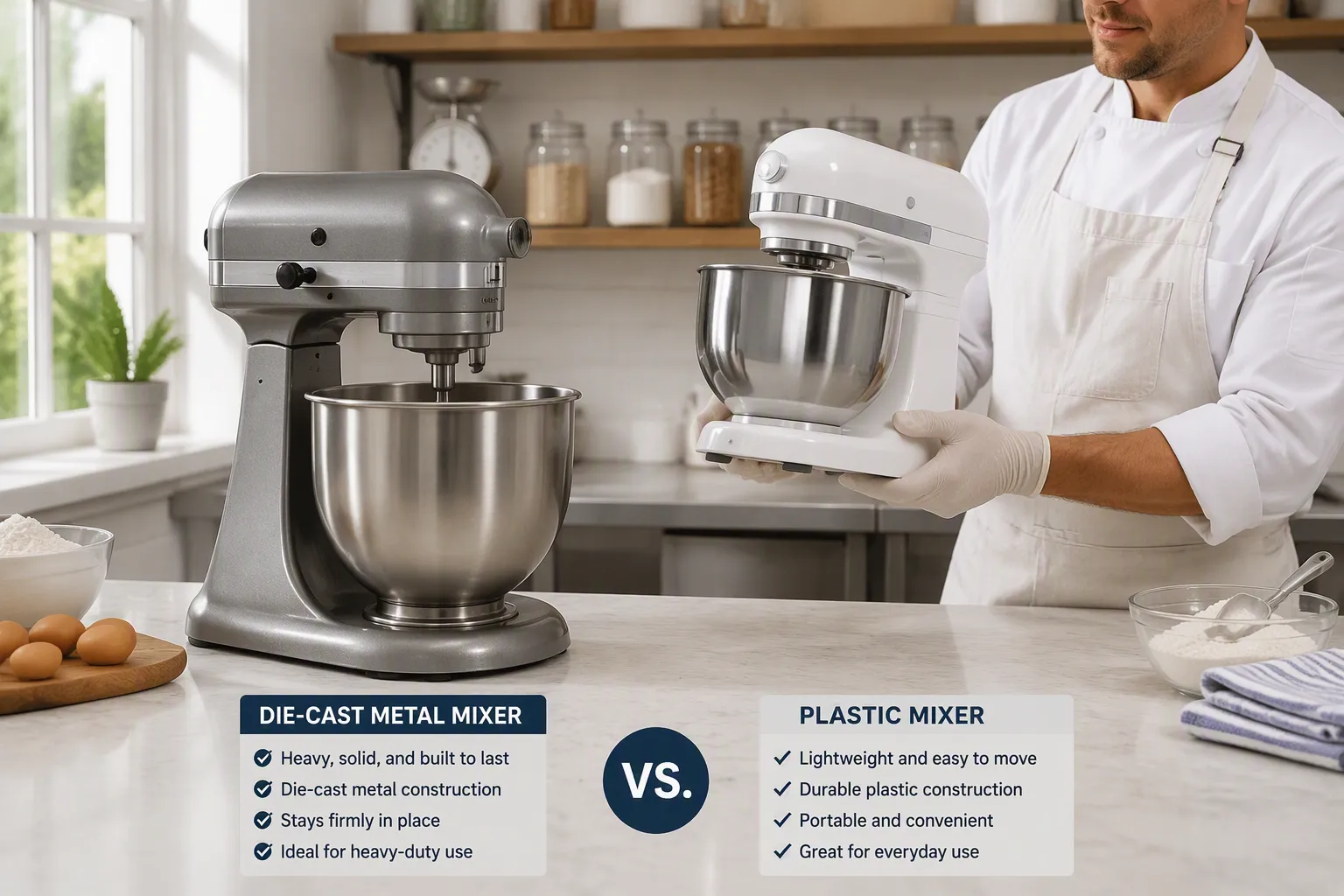
Commercial buyers often weigh portability against stability. A lighter mixer moves easily between stations. A heavier machine stays planted during heavy kneading. The choice depends on how the kitchen operates daily.
A die cast stand mixer housing adds substantial mass to the total unit. That mass keeps the machine anchored during stiff dough mixing cycles. Vibrations do not walk the mixer across the counter. Operators do not need to hold the unit steady while scraping the bowl.
Plastic housings reduce weight significantly. A single person can lift and relocate a plastic-bodied mixer between workstations. That convenience suits smaller kitchens where equipment shares counter space. The trade-off appears during operation. A lightweight machine shakes and shifts when processing dense batches. The housing flexes under load, which accelerates gear wear and creates noise.
The following table summarizes the key differences:
|
Factor |
Die-Cast Housing |
Plastic Housing |
|---|---|---|
|
Total weight range |
15–30 lbs |
8–15 lbs |
|
Stability during heavy mixing |
Excellent, stays planted |
Moderate, can shift |
|
Ease of relocation |
Two-person task typically |
Single-person task |
|
Vibration dampening |
High due to rigid mass |
Lower due to flex |
Commercial kitchens rarely move mixers between shifts. Units remain in one location for years. Portability therefore holds less value than stability. The best material for commercial mixers provides a firm foundation for the motor and transmission. Die-cast metal delivers that foundation consistently.
For kitchens that need occasional repositioning, casters or wheeled stands solve the mobility challenge. Operators roll a heavy unit across the floor without lifting. That solution preserves the stability advantage of the commercial stand mixer housing material while addressing the portability concern. Weight becomes an asset rather than a drawback.
Kitchens that prioritize long-term reliability choose die-cast. The material supports consistent performance and protects internal parts from everyday stresses. Which One Is Better for Commercial Use? The heavier mixer, because its weight keeps it working reliably.
Die-Cast Stand Mixer Housing delivers unmatched durability and heat management. It stands as the Best Material For Commercial Mixers for high-volume operations. The Commercial Stand Mixer Housing Material choice affects long-term costs and service life. The higher initial investment pays back through decades of reliable service. Which One Is Better for Commercial Use? Die-cast provides the definitive answer for demanding professional kitchens.
Professional buyers evaluate reliability, heat management, and long-term value when selecting a Commercial Stand Mixer Housing Material. The answers below address common concerns.
Yes. The Die Cast Stand Mixer Housing delivers decades of service. Commercial kitchens report fewer repairs. It reduces replacement frequency and downtime. Total long-term cost remains lower.
Yes. A metal Commercial Stand Mixer Housing Material dissipates heat better than plastic. It provides rigid stability for consistent performance. This reduces gear wear and extends motor life.
Die-cast metal qualifies as the Best Material For Commercial Mixers. It withstands constant heavy load. It protects internal parts. It requires fewer repairs. This saves money long-term.



Tel : +86-755-8450 0805
Email : sale@sanlidaco.com
No.27,Jiangjunmao lndustrial area, Wulian community, Longgang street,Longgang district, Shenzhen City, Guangdong Province, China 518083
© 2026 Shenzhen Sanlida Electrical Technology Co.,Ltd
