



How to choose the right die-cast stand mixer for your kitchen
March 12, 2026
Choosing the right Die-Cast Stand Mixer for your kitchen requires careful thought. You need to match the mixer’s size and features to your cooking habits and available space. Consider your budget before making a purchase. Think about what you prepare most often—bread, cakes, or pasta. Your personal needs should guide your final decision.
Identify your primary cooking tasks to choose a mixer with the right features. Consider if you bake bread, whip meringues, or make pasta.
Select a mixer with sufficient motor power for your needs. A strong motor ensures consistent performance, especially for heavy doughs.
Choose the right bowl size to prevent spills and enhance mixing efficiency. A bowl that is at least twice the size of your ingredients is ideal.
Evaluate the mixer’s speed settings for versatility. Multiple speeds allow you to handle various tasks, from gentle mixing to vigorous whipping.
Consider your kitchen space and storage options. Ensure the mixer fits comfortably on your countertop or in your cabinets.
You should start by considering the types of recipes you prepare most often. A Die-Cast Stand Mixer can handle a wide range of tasks, but your main uses will determine which features matter most. Culinary experts highlight several common tasks that benefit from a stand mixer:
Whipping meringue for desserts
Kneading tough bread dough
Baking tasks that require consistent results
If you bake bread every week, you need a mixer with a strong motor and a durable build. If you love making delicate meringues, you should look for a model with precise speed control. Beginners often start with bread recipes, so a reliable mixer can help you achieve better results from the start.
Tip: List your favorite recipes and check if they require heavy mixing, whipping, or kneading. This step will help you match your needs to the right mixer features.
How often you use your stand mixer will influence your decision. If you bake or cook several times a week, you need a model that offers durability and consistent performance. Weekly bread dough preparation and frequent meringue recipes demand a mixer that can handle repeated use without overheating or wearing out.
For occasional bakers, a basic model may suffice. However, if you plan to expand your baking skills, investing in a high-quality Die-Cast Stand Mixer ensures you have the right tool as your needs grow.
Note: Frequent use puts more stress on the motor and attachments. Choose a mixer designed for regular, heavy-duty tasks if you expect to use it often.
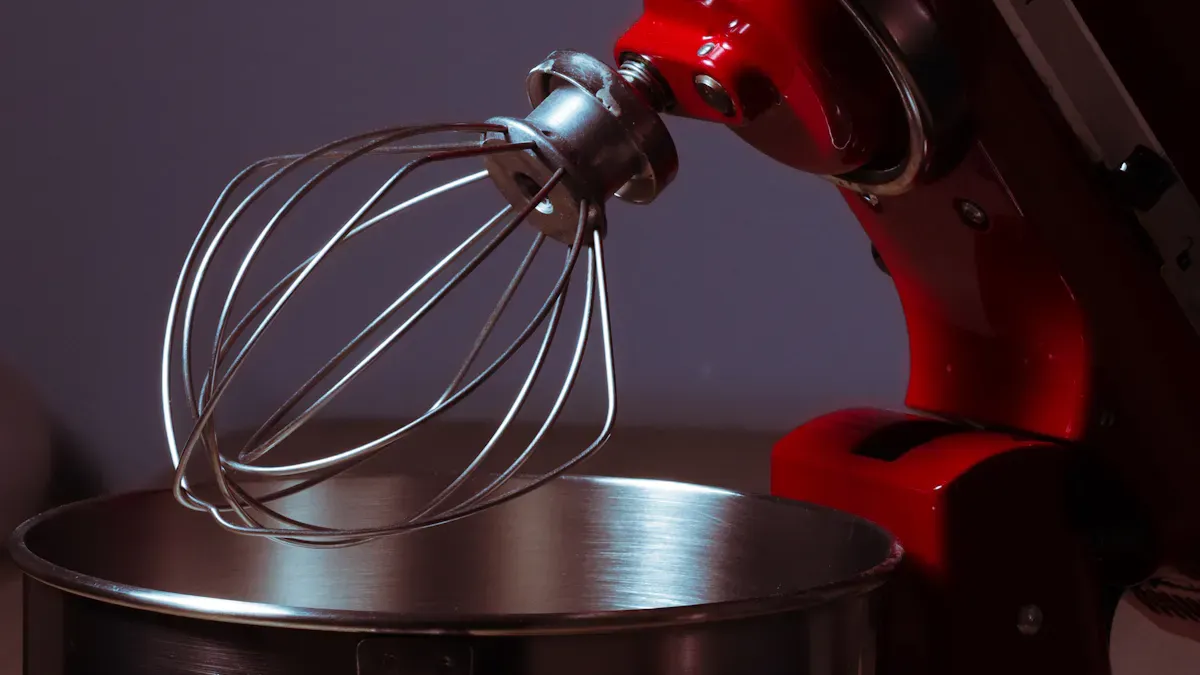
You should pay close attention to motor power when selecting a Die-Cast Stand Mixer. The motor determines how well the mixer handles different tasks. For heavy doughs, such as bread or pizza, you need a mixer with at least 1.3 horsepower. This power level ensures the mixer can maintain consistent torque and avoid overheating during demanding tasks. Lighter batters do not require as much power, but a strong motor still improves performance and longevity.
|
Aspect |
Description |
|---|---|
|
Motor Power |
High-torque motors designed for everyday and demanding tasks. |
|
Performance |
Maintains consistent speed under load, preventing stalling or overheating. |
|
Longevity |
Reliable operation with up to 600 watts ensures durability, especially with dense batters. |
|
Mixing Efficiency |
Consistent power output leads to uniform mixing and reduced processing time compared to hand mixing. |
A powerful motor not only improves mixing efficiency but also extends the life of your mixer. You can expect reliable operation even with frequent use.
Bowl size plays a crucial role in the versatility of your Die-Cast Stand Mixer. You should choose a bowl that is at least twice the size of your ingredients to prevent spills. Many home bakers prefer a 3-quart bowl for everyday tasks, but having a set with large, medium, and small bowls increases flexibility.
Jiyoon Jang recommends bowls twice the size of your ingredients.
Alli Gelles finds a 3-quart bowl ideal for most needs.
Rivera suggests a three-bowl set for maximum versatility.
An 8-quart bowl allows you to prepare large batches, such as over 13 dozen cookies or more than eight loaves of bread in one go. The design of the bowl, with a tapered bottom and tall sides, ensures effective mixing for both small and large quantities. This feature saves time and enhances efficiency, making the mixer suitable for both home and commercial kitchens.
Speed settings determine how well your Die-Cast Stand Mixer adapts to different culinary tasks. You need a mixer with multiple speed options to handle everything from gentle mixing to vigorous whipping.
|
Speed Setting |
Culinary Task |
Description |
|---|---|---|
|
Low |
Combining dry ingredients |
Gently mixes without creating a mess. |
|
Medium |
Creaming butter and sugar |
Ideal for achieving a smooth mixture. |
|
High |
Whipping egg whites |
Produces stiff peaks for meringues and soufflés. |
With a range of speeds, you can achieve precise results for each recipe. This versatility makes the mixer a valuable tool in your kitchen.
Attachments expand the functionality of your Die-Cast Stand Mixer. You should look for models that support a variety of attachments to maximize value and usability.
Dough Hook: Kneads dense bread and pizza doughs.
Flat Beater: Handles general mixing tasks like batters and cookie dough.
Wire Whip: Incorporates air into lighter mixtures such as meringues and whipped cream.
Optional Attachments: Meat grinders, pasta makers, ice cream churners, and grain mills.
|
Feature |
Description |
|---|---|
|
Compatibility |
Designed for specific models, ensuring a perfect fit. |
|
Versatility |
Enables grinding meat, making sausages, and more. |
|
Build Material |
High-quality aluminum alloy construction for durability. |
|
Included Accessories |
Multiple grinding plates and sausage stuffer tubes for various recipes. |
A mixer with broad attachment compatibility lets you tackle a wide range of kitchen projects, from baking to meal prep.
You will find two main types of Die-Cast Stand Mixer designs: tilt-head and bowl-lift. Each offers unique advantages for different users.
|
Feature |
Tilt-Head Models |
Bowl-Lift Models |
|---|---|---|
|
Access to Bowl |
Easy access by tilting the head back |
Requires a lever to lift the bowl |
|
Convenience |
Convenient for adding ingredients |
Less convenient during mixing |
|
Stability |
Suitable for everyday tasks |
Greater stability for heavy mixtures |
Tilt-head models provide easy access to the bowl, making them ideal for adding ingredients quickly. Bowl-lift models offer greater stability, which is essential when working with heavy doughs or large batches.
Build quality sets a Die-Cast Stand Mixer apart from other kitchen appliances. Die-cast metal construction absorbs vibrations, dissipates heat, and ensures precise alignment of moving parts.
|
Benefit |
Die-Cast Metal |
Plastic Alternatives |
|---|---|---|
|
Vibration Dampening |
Absorbs and dissipates vibrational energy effectively |
Flexes under load, leading to noise and fatigue |
|
Heat Dissipation |
Acts as a heat sink, drawing thermal energy away |
Poor heat management, risking component damage |
|
Structural Rigidity |
Ensures precise alignment, minimizing wear |
Can flex, leading to misalignment and accelerated wear |
You should choose a mixer with a stainless steel bowl for added durability and easy cleaning. The robust construction not only extends the life of your mixer but also enhances its appearance, making it a stylish addition to your kitchen.
Tip: If you want to explore more about best die-cast stand mixer for bread dough, check out our comprehensive guide for detailed reviews and recommendations.
You need to consider the size and weight of your stand mixer before making a purchase. A Die-Cast Stand Mixer often weighs more than plastic alternatives, which provides stability during heavy mixing tasks. However, the added weight can make moving or storing the mixer more challenging. Review the average dimensions and weights of popular models to find one that fits your kitchen and your needs:
|
Model |
Weight (lbs) |
Bowl Size (quarts) |
|---|---|---|
|
Artisan Mini |
14.3 |
3.5 |
|
Pro Bowl-Lift |
Varies |
5 to 8 |
|
NSF Certified® |
N/A |
8 |
A heavier mixer stays in place during operation, reducing vibration and noise. If you plan to store your mixer in a cabinet, check the weight to ensure you can lift it safely.
You should evaluate your available storage space before selecting a stand mixer. Some kitchens have limited countertop space, so you may need to store the mixer in a cabinet or pantry. Compact models, such as the Artisan Mini, fit easily in smaller spaces. Larger bowl-lift models require more room and may be best suited for permanent countertop placement.
Tip: Measure your available storage area before purchasing. This step helps you avoid frustration and ensures your mixer fits comfortably in your kitchen.
Today’s stand mixers serve as both functional appliances and statement pieces in modern kitchens. You can choose from a wide range of colors and finishes to match your kitchen decor. Market research shows that consumers now expect appliances to enhance the look of their kitchen, not just perform well. Brands focus on sleek forms, clean lines, and premium materials to attract design-conscious buyers.
Stand mixers are now seen as kitchen statement pieces, not just functional appliances.
There is a growing demand for aesthetically pleasing and stylish designs.
Brands are focusing on sleek forms and a variety of colors to attract design-conscious consumers.
Consumers expect a high level of design sophistication in kitchen appliances by 2025.
They prefer appliances that enhance kitchen decor rather than clutter it.
There is an emphasis on clean lines, premium materials, and user-friendly designs.
When you select a Die-Cast Stand Mixer, you invest in both performance and style. Choose a model that complements your kitchen’s color scheme and reflects your personal taste.
You should always consider your budget before selecting a stand mixer. The price of a Die-Cast Stand Mixer can vary widely based on brand, capacity, and included features. Entry-level models offer basic functionality, while premium mixers provide advanced performance and durability. Review the following table to compare prices of popular models:
|
Model |
Price |
|---|---|
|
ZACME 8.4QT Commercial Stand Mixer |
$399.99 |
|
Avantco MX8 |
$499.99 |
|
Hamilton Beach Commercial CPM800 |
$914.00 |
|
KitchenAid KSM8990CU Commercial Mixer |
$1,199.99 |
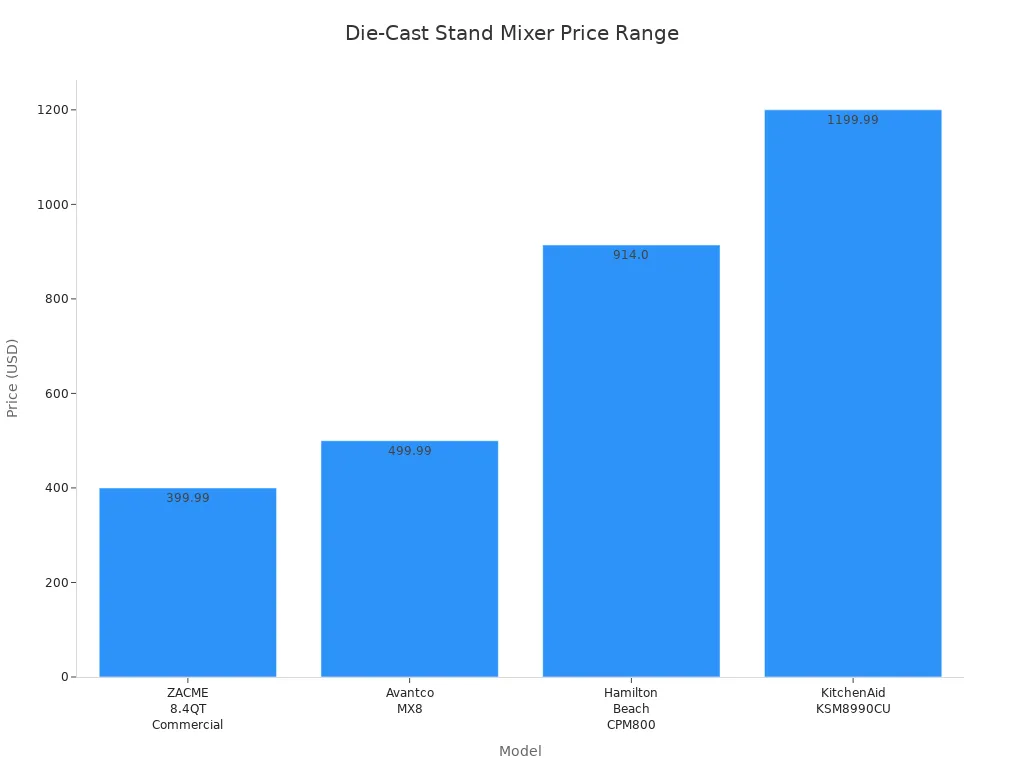
You can see that prices range from around $400 for entry-level commercial models to over $1,000 for top-tier mixers. Higher-priced mixers often include larger capacities, more powerful motors, and additional attachments. Consider how often you plan to use your mixer and which features matter most to you. Investing in a higher-end model may save you money in the long run by reducing the need for repairs or replacements.
Tip: Set a clear budget before shopping. This step helps you focus on mixers that meet your needs without overspending.
Warranty and customer support play a crucial role in your purchasing decision. Reliable brands offer warranties that cover parts and labor for at least one year. Some premium models provide extended warranties, giving you peace of mind for several years. You should check what the warranty covers, including the motor, attachments, and bowl.
Responsive customer support ensures you receive help quickly if you encounter issues. Look for brands with a reputation for excellent service and easy access to replacement parts. A strong warranty and support system protect your investment and keep your kitchen running smoothly.
Note: Always read the warranty terms carefully. Understanding the coverage and support options can prevent unexpected costs in the future.
You gain valuable insights by reading user reviews and ratings. Real-world experiences reveal how each Die-Cast Stand Mixer performs in daily use. Users often mention power, ease of cleaning, and durability as key factors. The following table summarizes common pros and cons from comparative analyses:
|
Brand |
Pros |
Cons |
|---|---|---|
|
Best Stand Mixers |
Excellent power for the price |
Heavier than compact models |
|
|
Large bowl capacity |
Fewer optional attachments than competitors |
|
Kitchen in the Box |
Budget-friendly |
Less powerful motor |
|
|
Space-saving design |
Smaller bowl capacity |
|
Hamilton Beach |
Affordable and dependable performance |
Not ideal for heavy doughs |
|
|
Known for ease of use and reliability |
|
You should look for patterns in user feedback. Consistent praise for power or complaints about weight can help you decide which model fits your routine. For more details, explore our guide on the best stand mixer for bread dough for in-depth comparisons and user experiences.
You have reviewed features, compared models, and considered your kitchen needs. Now, use this checklist to confirm your decision:
Identify your primary recipes and mixing tasks.
Confirm the motor power matches your baking or cooking frequency.
Check that the bowl size fits your batch sizes.
Review speed settings for versatility.
Ensure attachment compatibility for future needs.
Decide between tilt-head and bowl-lift designs.
Assess build quality and material.
Measure your kitchen space for size and weight.
Match the mixer’s style to your kitchen decor.
Set a clear budget and compare warranty options.
Read user reviews for real-world performance.
Tip: Print this checklist or save it on your phone. You can reference it while shopping in-store or online.
You can purchase a Die-Cast Stand Mixer from several trusted sources. Major appliance retailers, specialty kitchen stores, and official brand websites offer a wide selection. Online marketplaces provide convenience and access to user reviews. Always verify the seller’s reputation and return policy before you buy.
For the best deals and support, consider buying directly from the manufacturer or an authorized dealer. This approach ensures you receive genuine products and full warranty coverage. Many retailers offer seasonal promotions, so watch for discounts during holidays.
If you want to explore more options, visit our best stand mixer for bread dough page for curated recommendations and exclusive offers.
Note: Register your mixer after purchase to activate the warranty and access customer support.
You can choose the right Die-Cast Stand Mixer by focusing on your recipes, kitchen space, and budget. Review the checklist and compare models for a confident decision. Long-term value matters. The table below shows how build quality and motor type affect lifespan and cost:
|
Feature |
KitchenAid Stand Mixer |
Mid-Range Competitor |
Budget Mixer |
|---|---|---|---|
|
Build Material |
Die-cast metal + stainless steel accents |
Plastic housing with partial metal base |
Full plastic construction |
|
Gear Type |
Steel planetary gears |
Nylon-reinforced gears |
Plastic gears |
|
Motor Type |
Copper-wound, 300+ watt |
Aluminum-wound, ~250 watt |
Basic universal motor, ~200 watt |
|
Avg. Lifespan |
15–20+ years |
5–7 years |
2–3 years |
|
Price Range |
$300–$650 |
$150–$250 |
$60–$100 |
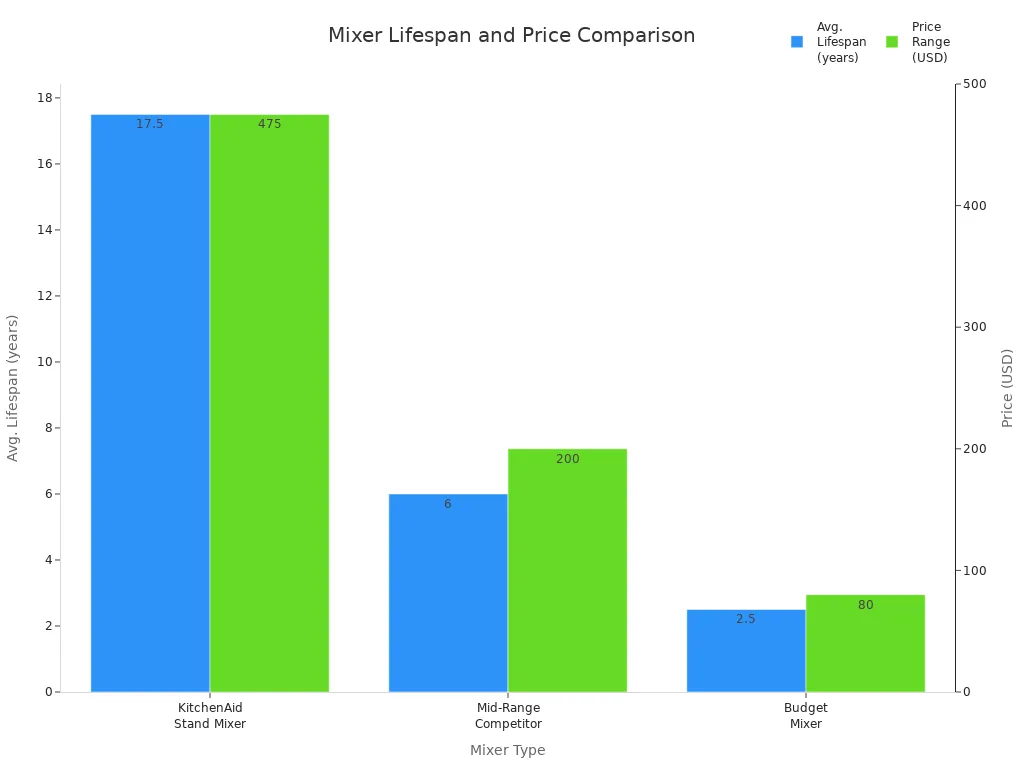
A quality mixer costs less per year over time and offers better performance. You should always consider warranty and support for peace of mind.
Die-cast stand mixers offer superior durability and stability. You get less vibration and longer lifespan. For more details, check our guide on the best die-cast stand mixer for bread dough here.
You should unplug the mixer and remove all attachments. Wash the bowl and accessories with warm, soapy water. Wipe the mixer body with a damp cloth. For more tips, visit our stand mixer cleaning and maintenance guide here.
Yes, you can use your mixer for many tasks. With the right attachments, you can grind meat, make pasta, or whip cream.
You should select a bowl size based on your batch sizes. A 5-quart bowl suits most home bakers. If you bake in large quantities, consider an 8-quart model for more flexibility.
Motor power determines how well your mixer handles tough doughs and frequent use. Choose a model with at least 300 watts for most baking needs. Heavy-duty tasks require higher wattage for consistent performance.



Tel : +86-755-8450 0805
Email : sale@sanlidaco.com
No.27,Jiangjunmao lndustrial area, Wulian community, Longgang street,Longgang district, Shenzhen City, Guangdong Province, China 518083
© 2026 Shenzhen Sanlida Electrical Technology Co.,Ltd
