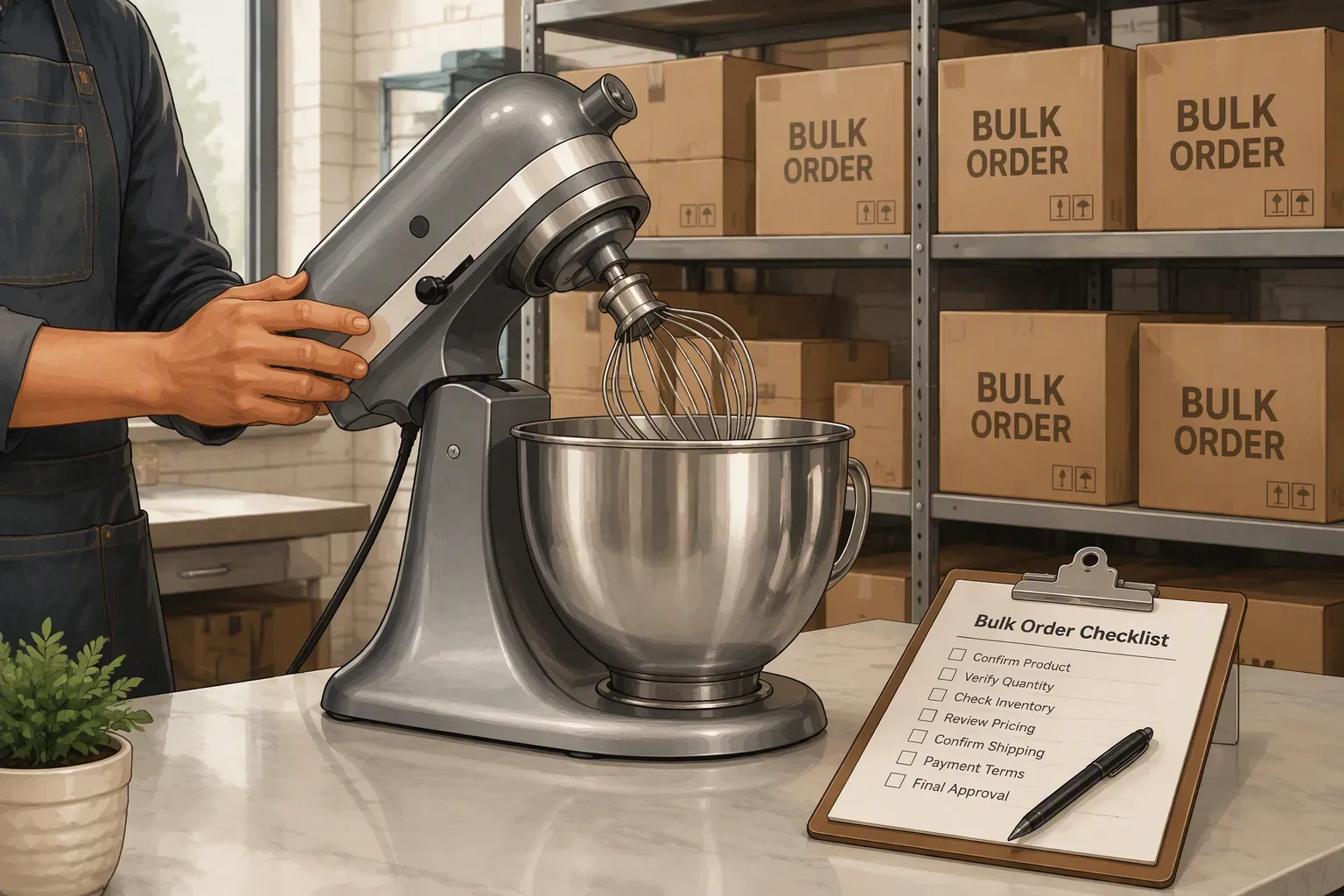
How to Evaluate Stand Mixer Quality Before Placing a Bulk Order
Sep 18, 2026
Purchasing a Stand Mixer in bulk compounds every quality flaw. A single defective unit becomes an expensive problem across hundreds of orders. You cannot afford to discover issues after shipment. Your evaluation must happen before you place any order.
Focus your attention on five critical areas that determine Stand Mixer quality: motor power and torque ratings, build materials and construction quality, empirical performance testing under load, durability signals such as warranty terms, and supplier reliability. Each factor directly impacts long-term value.
This article delivers a practical, step-by-step framework for assessing quality at scale. You will learn how to define clear acceptance criteria, manage sample evaluation, and verify consistency across production batches. The process eliminates guesswork from bulk procurement.
Key Takeaways
Focus on torque at the beater, not the wattage number.
Test each sample with your actual dough and scoring criteria.
Look for independent safety certifications like GS or ENEC.
Calculate total cost per batch over the mixer's lifespan.
Inspect Core Quality Indicators
Before you commit to a bulk order, you need to examine the core components that determine performance and longevity. Two critical indicators are motor power and build materials. These factors directly influence how well the mixer handles heavy doughs and how long it will last in your operation.
Motor Power and Torque
Many buyers assume that a higher wattage rating guarantees a stronger motor. That assumption is misleading. Wattage measures electrical input power, not output torque at the beater. Torque is the rotational force that actually moves dough. The table below summarizes how different motor types and drive systems affect real-world torque.
Factor
What It Measures / Effect
Impact on Torque Under Load
Wattage rating
Measures electrical input power drawn from the wall at max load/top speed
Does not measure output torque at the beater; higher wattage ≠ higher torque
Universal AC motors
Cheap, spin fast, lose torque badly at low RPM
Slow down and weaken when stiff dough is added
DC motors
Permanent magnets + electronic commutation
Deliver near-constant torque across entire RPM range (e.g., 500W DC at 60 RPM pushes as hard as at 200 RPM)
Belt-driven drive
Belt wastes 15–25% of input power
A 1,000W belt-driven mixer can match a 500W direct-drive mixer in real-world kneading
Direct-drive
Removes belt losses
Same wattage translates into more usable torque at the beater
Key takeaway
Wattage is a marketing number
Torque at the beater is what actually moves dough; a 500W DC motor can out-knead an 800W AC motor
A high-quality Stand Mixer should include thermal overload protection. This feature automatically shuts off the motor if it becomes too hot during prolonged heavy use. It prevents permanent motor damage and supports long-term reliability. However, if this protection triggers frequently during standard mixing tasks, it signals that the mixer may lack sufficient power for the job or has an inefficient design. Reaching for a higher wattage model is a common mistake; focus on the motor type and drive system instead.
Frequent thermal overload activation is a red flag. It means the motor cannot sustain its rated load without overheating, which indicates either inadequate power or poor thermal management.
Build Materials and Construction
The materials used in the mixer's construction signal its durability. Look for metal gears, especially in the drivetrain. Plastic gears wear quickly under high torque and are a common failure point in budget models. Die-cast metal housings provide better stability and heat dissipation than plastic shells. For bulk use, you want a Stand Mixer that stays planted on the counter and does not flex under load.
Size and capacity also matter. A larger bowl allows bigger batches, but the motor must have sufficient torque to handle that volume. Check the bowl size against your typical batch requirements. A 5-quart mixer may work for home use, but a commercial kitchen often needs 7 quarts or more. Also consider the weight and footprint: a heavier mixer usually means more metal and less vibration.
Construction quality extends to fit and finish. Inspect the attachments for tight tolerances. Ensure the tilt-head or bowl-lift mechanism operates smoothly and locks securely. A mixer that wobbles or clatters during mixing will cause inconsistent results and early wear. By evaluating these physical indicators, you can reject low-quality units before they reach your bulk order.
Test Stand Mixer Performance
Visual inspection alone cannot reveal how a mixer behaves under load. You must request a physical sample from each vendor and run functional tests. This step separates mixers that look good on paper from those that perform in your kitchen.
Mixing Consistency and Speed
Before you order samples from multiple suppliers, define your acceptance criteria in writing. Specify the batch size, dough hydration, and mixing time each unit must handle. Then score every sample against those same criteria. This approach removes bias and gives you comparable data.
Speed settings matter for consistency. A commercial stand mixer reviewed in this guide uses a three-speed design (105, 180, 408 rpm). That range covers heavy dough kneading, medium filling and batter work, and high-speed whipping. Three speeds suffice if you mix only bread and pizza dough. Fixed-speed systems may feel limiting for very light or very heavy batches. A variable-speed dial, such as an 11-speed option, is worth the upgrade if your menu includes cookies, cakes, and whipped items requiring finer control.
Mixer Tier
Typical Speed Settings
Basic mixers
3–5 speeds (sufficient for general use)
Advanced models
Up to 10 or more speeds (finer control for tasks like slow incorporation or high-speed whipping)
Test each sample with the tasks your operation actually runs. Prepare bread dough and pizza dough to evaluate torque under heavy load. Mix cookie batter to check creaming and folding. Watch for consistent results across repeated batches. A mixer that stalls, walks across the counter, or leaves unmixed pockets fails your criteria.
Evaluate design and ease of cleaning alongside performance. Check whether the bowl, beater, and dough hook remove without tools. Look for crevices that trap flour or grease. Features such as a timer, overload reset, or splash guard add value only if they work reliably. A Stand Mixer with a poorly sealed head may leak grease into the bowl during long kneading sessions.
Noise, Vibration, and Overheating
Run each sample through an extended mixing cycle and observe three signals: noise, vibration, and heat. Excessive noise often points to worn gears or poor bearing alignment. Vibration suggests an unbalanced drivetrain or a lightweight housing. Both problems worsen over time and lead to inconsistent results.
Overheating deserves close attention. Touch the housing near the motor after a heavy kneading cycle. A warm surface is normal. A hot surface that forces you to pull your hand away indicates inadequate cooling or an undersized motor. If the thermal overload trips during a standard batch, the unit cannot sustain your workload. Record how long each sample runs before the temperature rises and whether the overload resets cleanly.
Set a pass/fail threshold for each signal before testing begins. For example, require that the mixer completes a full dough batch without tripping the overload and without visible walking. Compare results across all samples on the same day under the same conditions. This discipline gives you defensible data for your bulk decision.
Check Durability and Certification Signals
Warranty Terms and Lifespan
A warranty reveals how much confidence the manufacturer has in its own product. A one-year warranty on a Stand Mixer suggests the maker expects limited service life under regular use. A three-year or five-year warranty on the motor and drivetrain signals that the components can survive years of heavy kneading. Read the fine print carefully. Some warranties cover only the housing, while others exclude the motor entirely. You want coverage that protects the parts most likely to fail: gears, bearings, and the motor itself.
Ask vendors for the expected service life in mixing hours or batch cycles. A manufacturer who tracks field data can give you a real answer. A vendor who cannot provide this figure likely has no reliability data at all. Request product references from current bulk buyers. Ask those buyers how long their units have run and what failed first. This feedback gives you a realistic picture of lifespan that no spec sheet can match.
Certifications and Safety Standards
Certifications prove that an independent lab tested the mixer against recognized safety standards. For the EU market, several marks carry weight beyond the mandatory CE mark. The table below summarizes what each certification demonstrates.
Certification
What independent testing demonstrates
Recognition by EU/national regulatory bodies
GS Mark (Germany)
Verifies safety beyond the EU baseline: construction strength, electrical insulation, earthing, thermal safety, overload protection; may include unannounced testing and factory checks.
Recognized as a strong independent safety mark, especially in Germany.
ENEC Mark
Pan-European certification independently verified against European harmonized safety standards.
Recognized across multiple EU countries as a European electrical certification mark.
National marks: NF (France), IMQ (Italy), CEBEC (Belgium), BEAB (UK)
Add country-specific checks such as stricter fire resistance, performance under national voltage/frequency conditions, and additional mechanical tests.
Recognized as national third-party certification marks in their respective countries and as positive indicators for appliances sold in the EU.
CE mark
Mandatory EU conformity, but often a manufacturer self-declaration rather than independent third-party testing.
Required for legal sale in the European Economic Area, but not a third-party certification mark.
The CE mark alone does not prove independent testing. Prioritize vendors who hold GS, ENEC, or national marks. These certifications require factory inspections and unannounced audits, which filter out inconsistent production. Request copies of the actual certificates, not just logos on a webpage. Verify the certificate number with the issuing body. This step confirms the document is genuine and still valid.
Evaluate Bulk-Specific Factors
Supplier Reliability and Cost
Supplier reliability requires direct verification on the factory floor. An on-site audit covers ten critical areas that reveal whether a manufacturer can deliver consistent quality at the promised volume. Walk the production floor and count active lines. Compare headcount per shift against the monthly output volume the supplier claims. The checklist below summarizes what to inspect.
Audit Area
What Good Looks Like
Production capacity
Visible active equipment and records matching the product scope
QC laboratory
Working lab setup with batch verification records
Retention samples
Physical samples tied to batch numbers
Raw material storage
Clear traceability from incoming to finished goods
Worker safety
Consistent PPE use and operating discipline
Export documentation
Shipping records matching claimed volume within 15%
A factory that cannot show retained stock or runs a lab with only one test setup does not support batch QC across multiple grades. Refusal to allow a floor walk is a deal-breaker. Factories that restrict access often run subcontracted production from unregistered facilities. Cross-check customs declarations against claimed volume. A supplier reporting fifty containers per month with declarations for only eight misrepresents capacity. Negotiate a trial order before committing to full production. A small batch run reveals whether the supplier meets your specifications consistently.
After-Sales Support and Parts
After-sales support determines recovery speed after equipment failure. A commercial kitchen cannot afford extended downtime. You need a supplier that stocks replacement gears, bearings, and motors for at least five years. Request a current price list for commonly replaced parts. Ask for the standard lead time on spare shipments. The quality of a single Stand Mixer matters less when replacement parts arrive in days rather than weeks.
Third-party inspection services provide a final safeguard before you release the bulk deposit. An inspection firm examines a random sample from the production batch. They test against the acceptance criteria you defined during the sample stage. The report confirms the batch meets your standards before leaving the factory. This step catches material substitutions and assembly defects that visual inspection alone misses. Arrange inspection after at least eighty percent of production is complete. That timing allows the factory to correct any issues before final shipment.
Compare Models and Calculate Value
Side-by-Side Specification Comparison
You need a structured method to compare multiple models side by side. Lay out each candidate's specifications in a table alongside your sample test results. Include motor type, gear material, housing construction, bowl capacity, speed range, and warranty length. Then add your empirical findings: whether the sample passed the dough test, how long it ran before noticeable heat buildup, and the noise level during operation.
Criterion
Model A (Candidate)
Model B (Candidate)
Winner
Motor type
DC motor
AC motor
Model A
Gear material
Metal
Plastic
Model A
Bowl capacity
5 quarts
7 quarts
Model B
Speed range
3 speeds
11 speeds
Model B
Passed dough test?
Yes
No (stalled)
Model A
Heat buildup time
12 minutes
5 minutes
Model A
Warranty length
3 years
1 year
Model A
This table reveals trade-offs that spec sheets alone obscure. One model may offer a larger bowl but use plastic gears. Another may have a wider speed range but an AC motor that loses torque under heavy load. Your sample test results tell you which specification choices actually work. Weight the criteria by your specific needs. If you mix bread dough daily, prioritize torque performance and gear material over bowl capacity. Score each model against your acceptance criteria. The highest-scoring model is the one to pursue.
Total Cost of Ownership
Purchase price alone does not determine value in bulk procurement. You must calculate the total cost of ownership across the expected service life. Start with the unit cost from each supplier. Then add projected maintenance expenses: replacement gears, bearings, and motor brushes over five years. Factor in downtime costs for each expected repair.
Request a current price list for commonly replaced parts before you commit. Divide the sum of initial cost plus five-year maintenance by the expected mixing hours or batch cycles. The formula is straightforward: cost per batch equals total ownership cost divided by total batches over the service life. A cheaper mixer with plastic gears may cost more per batch than a pricier model with metal components that last longer.
The initial cost of each Stand Mixer is only part of the equation. A model that requires frequent repairs carries hidden costs that erode your margin. Verify that the highest-scoring model from your specification comparison also offers the lowest cost per batch. That intersection of performance and value confirms your choice before you place a large order.
Quality evaluation follows a clear sequence. You inspect core indicators first, then test performance under load. Next, you verify durability signals and assess supplier reliability. Finally, you compare models and calculate total cost of ownership. Each step builds directly on the last one.
Before you commit to a large order, apply this checklist:
Request samples or demo units from every vendor.
Define acceptance criteria in writing.
Arrange third-party inspection before releasing your deposit.
These actions protect your investment and confirm that each Stand Mixer meets your standards. Request a sample today. A small test now prevents a costly mistake later on.
FAQ
Does a higher wattage rating guarantee a stronger stand mixer?
No. Wattage measures electrical input, not torque at the beater. A 500W DC motor with direct drive can out-knead an 800W AC belt-driven unit. Check motor type and drive system instead of chasing a bigger wattage number.
How many samples should you test before committing to a bulk order?
Request one sample from every shortlisted vendor. Run each through the same tasks on the same day. Score them against written acceptance criteria. This gives you comparable data and exposes weak units before you pay for full production.
Which certifications matter most for stand mixer safety?
The CE mark is mandatory but often self-declared. Prioritize GS, ENEC, or national marks like NF, IMQ, CEBEC, or BEAB. These require independent testing and factory audits. Always verify the certificate number with the issuing body.
What warranty length signals a durable stand mixer?
A one-year warranty suggests limited service life. Three to five years on the motor and drivetrain shows the manufacturer trusts its components. Read the fine print. Some warranties exclude the motor entirely, which defeats the purpose.
When should you schedule a third-party inspection?
Arrange it after at least eighty percent of production is complete. That timing lets the factory fix issues before final shipment. The inspector tests a random sample against your acceptance criteria and confirms the batch meets your standards.